
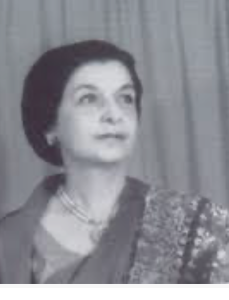
 Zehra Ali Yavar Jung was a distinguished and pioneering Indian social worker who dedicated her life to uplifting the vulnerable and improving urban environments. Born in Hyderabad in 1920 and educated there and in England, her commitment to social causes was evident from an early age. Long before her most famous initiatives, she had already been working tirelessly to improve her community. In 1940, she focused on ameliorating the harsh conditions faced by women detainees in Hyderabad’s prisons. She also served as the president of the Women’s Workshop, an organisation that provided crucial training and employment to destitute women, and played a significant role as the State Commissioner for Guides during a period of national reorganisation.
As the wife of a diplomat, Zehra Ali Yavar Jung served as a cultural ambassador during her husband’s postings abroad, projecting India’s rich heritage through its handicrafts. However, it was her deep concern for the health and living conditions of slum dwellers back in India that led to her most significant and lasting undertaking: the founding of the National Society for Clean Cities India (NSCC-I), also known as the Society for Clean Cities. This non-governmental organisation was born from her vision to launch a nationwide campaign to make India’s cities and towns cleaner and healthier.
The cornerstone of this initiative was the NSCC-I Children’s Complex, established in Mumbai in 1972. The complex embodied her holistic approach to community development, providing a safe and nurturing environment for young children from impoverished slums. It offered pre-primary education centred around a unique, value-based curriculum she designed: an 11-point programme of good citizenship. This programme, taught through stories and play, aimed to instil values such as integrity, respect for others, pride in one’s work, and the appreciation and conservation of nature.
Her vision extended far beyond early childhood education. The NSCC-I also focused on practical community needs, collaborating with municipal authorities to improve hygiene and provide essential sanitation facilities in slums. Recognising the importance of economic independence, the organisation offered vocational training courses for women in skills like computing, tailoring, and fashion design. Furthermore, a well-equipped dispensary was established on the premises to provide healthcare access to children and their mothers. Her environmental consciousness was also evident in the society’s strong support for the Chipko movement and its efforts to encourage children to participate in tree-saving activities.
In recognition of her profound and multifaceted contributions to social work, Zehra Ali Yavar Jung was awarded the Padma Bhushan, one of India’s highest civilian honours, in 1973. She passed away in 2010, but her work continues through the organisation she founded, leaving an indelible mark on urban welfare and social reform in India.