
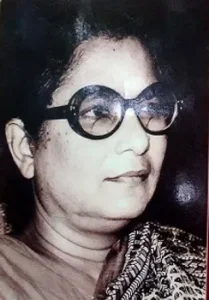
Zeenath Sajida (1924-2009) was a prominent Urdu writer, professor, and influential cultural figure in Hyderabad, making significant contributions to literature and gender debates, particularly during the 1940s and 1950s. As an active member of the Progressive Writers’ Association (PWA), her work was deeply infused with the movement’s goals of challenging social injustices and class-based struggles. She was a central figure in a flourishing community of female writers in Hyderabad, leaving a lasting mark on the region’s literary history.
Sajida’s literary output was both versatile and impactful. While she authored academic works on the literary culture of the Deccan, she is celebrated for her creative writing. Her 1947 short story collection, “Jal Tarang,” established her as a notable voice. However, her most pioneering works were her essays in the genres of humour and satire (tanz-o-mizah) and her pen-portraits (khaake). Though published in various magazines and newspapers throughout her most prolific period from the 1940s to the 1960s, these essays were only compiled into collections after her death.
Her writing skillfully blended critiques of societal norms with intimate, personal reflections. She tackled a wide range of subjects, from the lived experiences of women across different social strata to sharp critiques of middle-class values and the follies of everyday life. In what she termed “light sketches” (inshaiye), Sajida artfully debated provocative social questions and taboos.
Zeenath Sajida’s work was remarkably ahead of its time. Long before they became mainstream concepts, her essays explored themes we now identify as gender fluidity, gender privilege, the invisibility of domestic labour, and the immense mental load carried by women. She wrote with nuance about the unrealistic expectations placed upon middle-class professional women, highlighting the dual burdens they faced.
Her strength as a writer lies in her ability to use emotion effectively, making her readers empathise with her subjects while also making them laugh. This emotional depth revealed her own vulnerabilities, creating a powerful connection with her audience. Sajida’s essays stand as a testament to a vibrant tradition of women’s non-fiction writing in Hyderabad. This tradition was complex, receiving both support and ridicule from male contemporaries. Her work is particularly significant because it champions non-fiction, a genre often overlooked in favour of poetry and fiction, which have historically held greater cultural capital in Urdu literature. Through her insightful and humorous prose, Zeenath Sajida not only documented the heritage of her beloved Hyderabad but also carved out a crucial space for female perspectives in a male-dominated literary world.