
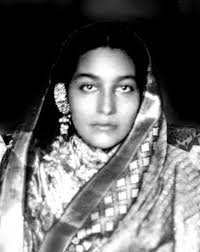
 Tayeba Begum Khedive Jung (1873-1922) was a trailblazing social reformer, educator, and feminist voice in Hyderabad during the late 19th and early 20th centuries. Born into a distinguished family as Tayeba Begum Bilgrami, she grew up in an intellectually stimulating environment and was a schoolmate of the future poet and activist, Sarojini Naidu. Tayeba Begum achieved a historic milestone in 1894 when she became the first Muslim woman in India to earn a university degree, graduating from the University of Madras. Although societal pressures forced her to discontinue her formal education after her marriage to Nawab Khedive Jung Bahadur, she remained a lifelong learner and a powerful agent for change.
Her most profound impact was in the field of women’s education. A firm believer in its power to empower, she dedicated herself to creating learning opportunities for girls in a society where they were scarce. She established eight schools for girls across Hyderabad, two of which —the Zenana School and the Victoria Zenana School —continue to function today. One of her most significant achievements was co-founding the Mahboobia Girls School in 1907. Alongside Sarojini Naidu and Lady Amina Hydari, she successfully persuaded the Nizam of Hyderabad to support the establishment of this vital institution, which became a beacon of quality education for generations of young women. Her advocacy extended to leadership roles in reformist organisations; she chaired the annual women’s conference of the Brahmo Samaj and led the Anjuman-e-Khawatin-e-Islam, an organisation dedicated to empowering women through knowledge.
Begum Khedive Jung’s commitment to social service was equally remarkable. She and Lady Hydari co-founded the Lady Hydari Club, which, while serving as a social hub for elite women, also ran a school and library for the underprivileged. Her compassion was on full display during the catastrophic Great Musi Flood of 1908. Despite being pregnant, she and Lady Hydari tirelessly organised and led relief efforts, providing crucial aid to those devastated by the disaster.
As a feminist, Tayeba Begum challenged patriarchal norms through her actions and intellect. By pursuing higher education and engaging in sophisticated debates with prominent men of her time, she defied the notion that women were intellectually inferior. Her novel, Anwari Begum, written in 1905 and published posthumously, served as a powerful vehicle for her reformist views. The novel explores the constrained lives of women in aristocratic Hyderabad households, critiquing their seclusion and advocating for progressive ideals, such as companionate marriage, based on mutual respect rather than subservience. Her legacy is that of a courageous pioneer whose work in education and social reform fundamentally altered the landscape of opportunity for women in Hyderabad and continues to inspire efforts for social justice and gender equality.