
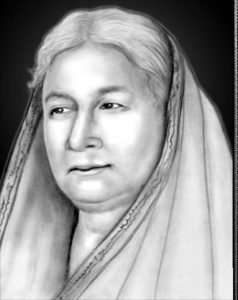
 Syed Fakrul Hajiya Hassan (1870-1970), also known as Fakhrul Hajia Begum, was a formidable but often overlooked female freedom fighter from the princely state of Hyderabad. Born to a Persian family and married into Hyderabadi nobility, she leveraged her position to become a pivotal figure in the nationalist movement.
Her journey into activism was greatly influenced by her close friendship with Sarojini Naidu. Fakhrul Hajia Begum was an active participant in the Khilafat and Non-Cooperation Movements. Her most iconic act of defiance came in 1925 when she organised a large public bonfire of foreign goods at her home, ‘Abid Manzil’, directly challenging the authority of the British Resident. This courageous event cemented her reputation as a staunch nationalist.
Her home became a haven for freedom fighters, and her wisdom and maternal support earned her the affectionate title “Amma Jan” (Respected Mother) from India’s foremost leaders, including Mahatma Gandhi, Jawaharlal Nehru, and Subhas Chandra Bose. She was a fervent supporter of Bose’s Indian National Army (INA) and campaigned for the release of its imprisoned soldiers.
Fakhrul Hajia Begum’s most enduring legacy was her success in inspiring her children to join the cause. Her sons, known as the ‘Hyderabad Hassan Brothers,’ made significant contributions. Her son, Abid Hasan Safrani, became a close aide to Netaji Subhas Chandra Bose and is credited with coining the timeless slogan “Jai Hind.” Her other sons, Badrul and Jafar Hassan, became devoted followers of Mahatma Gandhi.
While there are no known publications authored by her, her family’s story is partly chronicled in the book “Abid Hasan Safrani—Netaji’s Comrade-in-Arms.” Despite her immense contributions and the high esteem in which she was held, there are no records of any formal state awards or honours ever being conferred upon her. Syed Fakrul Hajiya Hassan remains a powerful example of the silent, selfless, and unwavering spirit of the many women who helped shape India’s independence.