
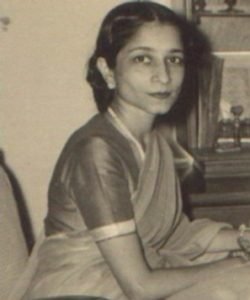
 Surayya Tyabji (1919-1978) was a distinguished artist and designer who played a crucial, yet often overlooked, role in shaping India’s national symbols during its transition to independence. Hailing from a prominent Muslim family deeply engaged in the freedom struggle, her contributions were pivotal in creating emblems that represented the unity and heritage of the new nation.
Born in Hyderabad, Surayya Tyabji’s commitment to India was a family legacy. Her grandfather was the Prime Minister of Hyderabad, her grandmother a pioneer in women’s education, and her husband’s family had a long history of leadership within the Indian National Congress. This environment nurtured her artistic talent and strong sense of national identity.
Tyabji’s most significant contribution was her work on the Indian National Flag. As India neared independence in 1947, the Flag Committee, headed by Rajendra Prasad, sought a design that would be acceptable to all communities, moving beyond the Indian National Congress party’s flag, which featured a charkha (spinning wheel). Surayya Tyabji and her husband, Badruddin Tyabji, were actively involved in this process.
It was Surayya Tyabji who proposed replacing the charkha with the Ashoka Chakra, a wheel with 24 spokes from the Lion Capital of Ashoka at Sarnath. This was a masterstroke of design and symbolism. The Chakra represented both movement and dharma (righteousness), ancient ideals that resonated across the diverse fabric of Indian society. This change transformed the flag from a party-specific banner into a truly national emblem. After initially painting a black chakra, which Gandhiji objected to, it was changed to its final navy-blue colour.
Tyabji’s involvement did not end with the design. She meticulously oversaw the sewing of the very first flag, ensuring the shades of saffron, white, and green were precise. This flag was hoisted on Prime Minister Jawaharlal Nehru’s car on the eve of independence, marking a historic moment she personally helped craft. The Constituent Assembly officially adopted this design on July 22, 1947.
Surayya Tyabji’s story is a powerful reminder of the vital contributions of women, particularly Muslim women, in shaping the identity of modern India.