
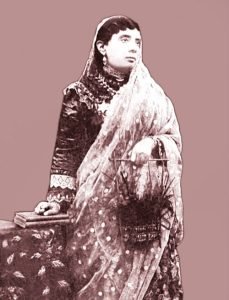
 Suhrawardiya Begum, also known as Khujista Akhtar Banu, was a trailblazing figure in the late 19th and early 20th centuries, celebrated for her tireless advocacy for women’s education and empowerment in India. Born in 1847, she was a prominent member of the distinguished Suhrawardy family of Bengal, a clan well-regarded for its contributions to social reform and learning. Building on this legacy, Suhrawardiya Begum carved out her own significant role as an influential voice for progress during a pivotal time in the nation’s history.
A pioneer in her own right, she was among the first Indian women to successfully pass the Senior Cambridge examinations, a remarkable achievement for her era. This personal accomplishment fueled her passion for extending educational opportunities to other women. Her most notable contribution in this area was her crucial role in founding the Suhrawardia Girls’ High School in Calcutta in 1909. This institution served as a testament to her vision, providing a vital space for girls to pursue formal education.
Beyond her work in establishing schools, Suhrawardiya Begum was also a writer who used her literary talents to advance her cause. She authored several works that centred on women’s issues and the importance of education. Through her writing, she contributed to the growing discourse on women’s rights and empowerment in colonial India, helping to bring these critical topics into the public sphere.
As an active participant in various social reform movements, she consistently championed women’s rights and education at a time when such advocacy was often met with resistance. Her efforts were foundational, laying the essential groundwork for future generations of women in Bengal and beyond. Suhrawardiya Begum’s legacy is defined by her dedication to creating a society where women could pursue education, assert their rights, and achieve their full potential.