
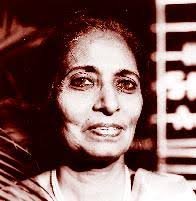
 Rafia Manzoorul Ameen (1930-2008) was a distinguished Indian Urdu writer, celebrated for her profound contributions to both fiction and non-fiction. Born in Hyderabad, Telangana, she emerged as a significant voice chronicling the social fabric and feudal legacy of her native city. She is best known for her vivid portrayal of Hyderabadi feudalism and Deccani culture, a theme that defined her most acclaimed works. Beyond her novels, Ameen was an accomplished short story writer and a screenwriter whose work successfully transitioned from the printed page to the television screen, captivating a wide audience.
Rafia Manzoorul Ameen was born into a family with strong intellectual and literary connections. She pursued a degree in science, a path that later influenced her writing, as evidenced in her non-fiction work. She was married to Manzoorul Ameen, a distinguished scholar, poet, and media professional. He served as an Assistant Station Director at All India Radio in Srinagar and was instrumental in establishing the Department of Journalism at the University of Kashmir. His career later took him to Maulana Azad National Urdu University in Hyderabad, a move that brought them back to her hometown. Their life together, which included a period in Kashmir, deeply influenced her literary perspectives and themes. Her daughter, Dr. Zishan Samiuddin, has also carried on the family’s intellectual legacy.
Rafia Manzoorul Ameen’s literary output was prolific, encompassing over 200 short stories and several novels. Her writing is celebrated for its deep insight into human nature, its socio-political commentary, and its authentic depiction of the era’s cultural landscape. Her most significant contributions include:
- Novels: Her most celebrated works are the novels Alam Panaah (Refuge of the World; 1983) and Yeh Raaste(These Paths; 1995).
-
Alam Panaah: This novel is widely regarded as her masterpiece. It is a powerful chronicle of Hyderabad’s feudal legacy, meticulously detailing the lives of the city’s aristocracy and their transition in a changing society. The novel is praised for its nuanced characters and its ability to capture the unique etiquette and culture of the Deccani Nawabs, particularly their emphasis on education and art.
-
Yeh Raaste: Published later, this novel further established her reputation as a formidable voice in Urdu literature, exploring themes of societal change and individual struggle.
-
-
Short Stories and Non-Fiction: Ameen’s collection of short stories, such as Shishon Ka Koi Maseeha Nahi(There Is No Messiah for Mirrors), cemented her status as a master of the form. She also ventured into non-fiction with works like Sciencei Zaviye (Scientific Angles), a book on science that was included in the curriculum at Nagpur University, showcasing her diverse interests and intellectual breadth.
Rafia Manzoorul Ameen’s work reached a massive audience through the television adaptation of her novel, Alam Panaah. Titled Farmaan, the popular TV series aired on DD National in 1994. She herself wrote the screenplay, ensuring the adaptation remained true to the spirit and integrity of the original text. The serial’s popularity was a testament to the universal appeal of her storytelling and its exploration of familial bonds, honour, and the complexities of a fading aristocratic world.