
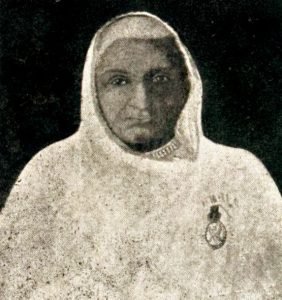
 Qudsia Begum was a pioneering female ruler in 19th-century India, serving as the Nawab of Bhopal from 1819 to 1837. Her reign established a remarkable dynasty of female leadership that lasted for over a century.
Born in 1801, Qudsia Begum married Nazar Mohammad Khan in 1817 and later became the mother of Sikandar Begum. Following her husband’s death, she ascended to the throne of Bhopal in 1819 at the age of 18. In a bold and unprecedented move, she became the first woman in South Asia to successfully assert the legal right of a Muslim woman to rule a state. To secure her position, she skillfully navigated the political landscape by forming strategic alliances with her rivals, seeking legitimacy from British agents, and garnering the support of religious authorities.
As a ruler, Qudsia Begum was known for her formidable leadership. She personally commanded her army and was often at the forefront of battles, demonstrating exceptional courage and military acumen.
In 1837, she chose to abdicate the throne in favour of her son-in-law. However, her abdication did not mark the end of her political influence. She remained a significant figure in the state’s affairs throughout the reigns of her successors. Qudsia Begum passed away in 1881, leaving behind a powerful legacy.
Qudsia Begum’s reign was the start of an extraordinary era of female rulers in Bhopal. Her actions paved the way for three successive generations of women to lead the state for nearly 107 years, from 1819 to 1926. This dynasty included her daughter, Sikandar Begum; her granddaughter, Shah Jahan Begum; and her great-granddaughter, Sultan Jahan Begum.