
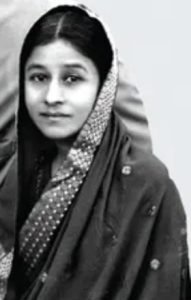
 Leila Hasan Latif (Hydari) was a significant, though often understated, figure whose influence was deeply embedded in the social and political fabric of 20th-century India. While not a public figure in the conventional sense, her life’s work can be seen as a form of social contribution through the nurturing of a family that played a pivotal role in shaping the newly independent nation. Her legacy is less about personal accolades and more about the values of public service, education, and progressive thought she instilled in her children.
Born in 1898 into the distinguished Tyabji-Hydari family, Leila was immersed in an environment of social reform and political consciousness from a young age. She was the niece and adopted daughter of Sir Akbar Hydari, the Prime Minister of Hyderabad State, and a key figure in the establishment of institutions such as the Doon School. This connection placed her at the heart of a family deeply committed to education and public service. Notably, her family championed women’s education at a time when it was uncommon, a progressive value passed down from her grandmother, Lady Amina Hydari. This forward-thinking upbringing shaped Leila’s worldview and provided the foundation for the secular and adventurous environment in which she raised her own children.
Leila Hasan Latif’s most profound impact is visible through the remarkable achievements of her children. She cultivated an atmosphere that encouraged learning, adaptability, and a strong sense of national duty. Her daughter, Surayya Badruddin Tyabji, left an indelible mark on India’s identity by playing a crucial role in designing the Indian national flag. It was Surayya who suggested replacing the charkha with the Ashoka Chakra and who supervised the sewing of the very first flag hoisted. She also made significant contributions to the design of the Indian National Emblem.
Her son, Air Chief Marshal Idris H. Latif, rose to the highest echelons of the Indian military, serving as the Chief of Air Staff of the Indian Air Force. His career was a testament to the values of discipline and service that were part of his family’s ethos. Through her daughter’s marriage, Leila was also connected to the influential Tyabji family, further situating her within a network of individuals dedicated to India’s independence movement and its subsequent development in politics, diplomacy, and academia.
Leila Hasan Latif (Hydari) represents a vital, yet often overlooked, aspect of social contribution: the role of a matriarch in a family dedicated to nation-building. Her personal work was in shaping the character and ambition of her children, who went on to serve India in monumental ways. Her life, rooted in a tradition of social reform and progressive ideals, demonstrates that influence is not always measured by public awards but by the lasting legacy passed on to future generations. Through her family, Leila’s commitment to a modern, secular, and strong India was profoundly realised.