
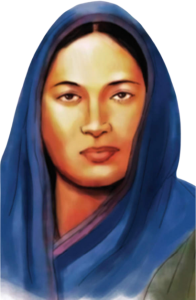
 Fatima Sheikh was a pioneering 19th-century Indian educator and social reformer who, alongside visionaries Jyotirao and Savitribai Phule, courageously championed education for girls and marginalised communities. Widely regarded as the first Muslim woman teacher in India, her contributions were foundational to the fight against caste and gender discrimination, though her story remained largely overlooked for more than a century.
Born in Pune in 1831, Fatima Sheikh’s background profoundly shaped her life’s work. Her family belonged to the Julaha community, a lower-caste group of weavers who had migrated from present-day Uttar Pradesh. Having lost her parents at a young age, she was raised by her brother, Usman Sheikh. It was Usman’s progressive mindset and support that proved crucial not only for Fatima’s own education but for the very genesis of a revolutionary educational movement in India.
Her life became intertwined with that of the Phules, who were actively working to educate girls and members of lower-caste communities. When Jyotirao and Savitribai Phule faced immense social pressure and were evicted from their own home by their family for their radical work, it was Usman Sheikh who offered them shelter. In 1848, their home became the site of the Indigenous Library, India’s first school for girls. It was here that Fatima Sheikh, along with Savitribai Phule, began their historic mission as teachers. To formalise their skills, both women enrolled in a teacher training program, equipping themselves for the challenges ahead.
Fatima Sheikh was not just a collaborator but a dedicated educator in her own right. She taught at all five schools that the Phules eventually established, undertaking the challenging task of convincing families to send their daughters to school. She personally went door-to-door in Dalit and Muslim communities, working to overcome deep-seated prejudice against educating girls. The curriculum she and the Phules promoted was progressive, focusing on subjects such as mathematics, science, and social studies rather than traditional religious texts, to provide a modern and empowering education.
Her work was an act of profound social rebellion. By championing education for all, regardless of caste, religion, or gender, she challenged the intertwined structures of patriarchy and the caste system. This work was met with fierce opposition and harassment from both upper-caste Hindus and orthodox Muslims, but she remained steadfast. Although her immense contributions were forgotten for many decades, recent efforts have begun to restore her to her rightful place in history. The recognition of her legacy, including a Google Doodle in her honour, celebrates a woman whose courage and dedication helped light the way for social reform and inclusive education in India.