
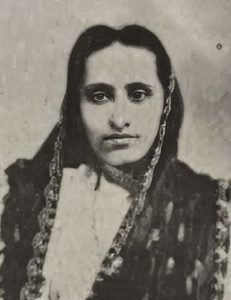
 Fatima Arzu Begam was an influential and pioneering figure in the early feminist movement in India, recognised for her significant contributions to women’s education and social reform. As the sister of Maulana Abul Kalam Azad, a preeminent leader of the Indian independence movement, she was positioned at the intersection of nationalism and social change, and she used this platform to advocate powerfully for the rights and empowerment of women.
Working closely alongside her sister, Abru Begum, Fatima Arzu Begam was one of the earliest feminist educationists in the country. At a time when societal norms and conservative traditions severely restricted women’s access to formal learning, the sisters championed the cause of education as the fundamental tool for liberation and empowerment. They were instrumental in promoting educational opportunities for women, particularly within Muslim communities, challenging the prevailing mindset that confined women to the domestic sphere. Their efforts were crucial in creating a space where the importance of educating girls could be discussed and advanced.
Beyond her focus on education, Fatima Arzu Begam was an active participant in broader social reform movements. Her advocacy aimed to improve the overall status of women, seeking changes that would grant them greater freedom, autonomy, and the ability to participate in public life. She understood that education was intrinsically linked to social standing and that an educated woman was better equipped to contribute to her family, her community, and the nation as a whole.
The legacy of Fatima Arzu Begam and her sister is foundational to the history of women’s rights in India. Their unwavering commitment and pioneering work helped lay the essential groundwork for the feminist movements that would follow. By inspiring future generations of women leaders and activists, they ensured that the struggle for equality would continue to gain momentum. Their contributions are remembered as a vital part of the broader narrative of women’s empowerment that unfolded alongside India’s fight for independence. Fatima Arzu Begam’s life exemplifies the powerful connection between education, social reform, and feminism, marking her as a key historical figure in the long journey toward gender equality in India.