
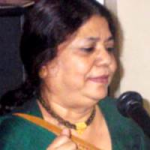
 Dr. Rafia Shabnam Abidi is a distinguished Indian scholar and author who has made significant contributions to Urdu literature and academia. Born in Mumbai on December 7, 1943, she initially published under the name Rafia Shabnam Manchari, a nod to her father’s hometown, Manchar, Maharashtra. Her father, a respected teacher and mathematician, played a crucial role in her early literary development.
Dr. Abidi’s academic journey culminated in her becoming a prominent figure at Mumbai University. She served as a professor in the Department of Urdu and Persian, where she was appointed to the prestigious Krishna Chander Chair. Her dedication and expertise eventually led her to become the Head of the Department of Urdu, a testament to her profound influence and respected position within the academic community. Her work has been incorporated into the university’s curriculum, with her book “Krishna Chandar Mumbai Aur Urdu Kahani” being part of the M.A. Urdu syllabus, solidifying her legacy as an influential educator.
A truly multi-talented writer, Dr. Abidi’s literary output encompasses a diverse range of genres, showcasing her versatility and profound commitment to literature. Her creative works include four poetry collections, such as “Mausam Bheegi Aankhon Ka”(1985) and “Shaakh-e-Nabat” (2020), which explore profound philosophical and emotional themes. Her prose includes two novels and a collection of short stories, “Anmol Kahaniyan” (1992).
Beyond creative writing, she has made substantial contributions to literary criticism and scholarship. Notable critical essays include “Mulla Wajhi Aur Inshaiya: Ek Tehqeeqi Mutala” (1988) and “Ali Sardar Jafri: Shakhsiyat Aur Adabi Khidmaat” (1993). As a scholar, her work has been pivotal in analysing and documenting Urdu literary traditions. Furthermore, Dr. Abidi has contributed to children’s literature with books like “Bachchon Ke Sardar Jafari” and has also been a prolific translator. Her translations of poetry from Marathi and Persian into Urdu, including “Marathi Adab Ek Ta’aruf,” have helped to bridge the gap between linguistic communities.
Dr. Abidi’s extensive body of work has earned her considerable recognition. In February 2005, Mumbai University’s Department of Arabic and the Mumbai Literary and Cultural Society honoured her for her exceptional academic and literary services. Her influence was further highlighted when the literary magazine “Tiryaaq” dedicated its entire June 2017 issue to her, celebrating her multifaceted contributions to Urdu literature.
Her poetic style, characterised by its depth and contemplative nature, has inspired many contemporary female Urdu poets, who see her as a role model. Her couplet, “khud-kushī qatl-e-anā tark-e-tamannā bairāg / zindagī tere nazar aane lage hal kitne,” perfectly captures her exploration of complex human emotions and existential questions.
In sum, Dr. Rafia Shabnam Abidi is more than just an author; she is a quintessential scholar and literary figure whose work as a poet, novelist, critic, and translator has left an indelible mark on Urdu literature. Her dual role as an academic and a creative writer has cemented her legacy as a pillar of intellectual and cultural life in India.