
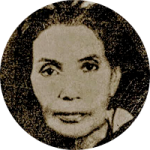
 Makhfi Lakhnavi, whose real name was Amatul Fatima (1902-1953), was a renowned Urdu poetess from the early 20th century. Her poetic talent is evident in the verses that survive, positioning her as a significant yet enigmatic figure in Urdu literature. She adopted the takhallus (pen name) ‘Makhfi‘, which translates to ‘hidden’ or ‘concealed’. Her surname, ‘Lakhnavi’, firmly places her origins in Lucknow, the historic heartland of Urdu poetry and culture. This city’s rich literary environment undoubtedly shaped her artistic sensibilities. She was among the many individuals who migrated to Pakistan following the partition of India in 1947. She died in Karachi in 1953.
Makhfi Lakhnavi was a poetess in the classical tradition, primarily composing ghazals. Her surviving works showcase a profound command of language and a deep emotional intelligence. Her poetry explores timeless themes of love (), separation (), longing, and the philosophical complexities of fate and human existence.
Her style is marked by a delicate poignancy and introspection. She masterfully employed classical metaphors and imagery to convey personal and universal sentiments. A recurring theme in her couplets is the transient nature of life and the inevitability of sorrow, handled with a grace and resilience that speaks to her artistic maturity. One of her notable couplets encapsulates this sentiment:
Naqsh-e-paa tak bhi na paaye sar-e-manzil Makhfi Hum ne is raah mein kya kya na uthaye sadme
(We could not even find a footprint at the destination, O Makhfi, Though we endured countless sorrows upon this path.)
Wusʿat-e dil aray maʿādh Allāh
Sārī duniyā samā’ī jātī haiThe vastness of the heart — God forbid!
The entire world can be encompassed within it.
Makhfi Lakhnavi’s legacy is that of a gifted poet whose voice has been partially obscured by time. She represents a generation of talented female writers whose contributions, for various socio-cultural reasons, were not as extensively documented as those of their male counterparts. The preservation of her work, even in a limited capacity, offers a valuable glimpse into the rich tapestry of female poetic expression from a transformative period in South Asian history.