
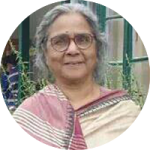
 Bilqis Zafirul Hasan is a celebrated contemporary Urdu poet, short story writer, and playwright, widely regarded for her powerful literary voice on social and feminist issues. While she has written across multiple genres, her work is consistently marked by a deep concern for the human condition, particularly the struggles of women and the marginalised.
Born Bilquis Parveen on September 1, 1938, in Patna, Bihar, she later adopted the pen name Bilquis Bano Rehmani before her marriage. She moved to Delhi, where she has been a prominent figure in the city’s literary circles. Her work is characterised by its stark realism and unflinching portrayal of life’s complexities. Although her writing often deals with themes traditionally associated with feminism, she has expressed a preference for being identified as a humanitarian writer, addressing the suffering of all human beings.
Hasan’s literary output is both prolific and diverse, with her publications spanning several genres. Her key works include:
- Poetry Collections:
- Geela Indhan (The Wet Fuel, 1996)
- Sholon Ke Darmiyan (Amidst the Flames, 2004)
- Short Story Collections:
- Weeraney Aabad Gharon Ke (Of Desolate Inhabited Homes, 2008)
- Maange Ki Aag (The Fire on Loan, 2011)
- Plays:
- Tamasha Kare Koi (Let Someone Put on a Show, 2012)
- Children’s Stories:
- Dilchasp (Interesting)
Her poetry and prose delve into a range of social and feminist themes. In her poetry, she often uses powerful metaphors to expose the hypocrisy and injustice women face. For instance, her poems tackle subjects like female suicide, domestic abuse, and the societal pressures that limit women’s lives. In her short stories, she extends her critique to broader social ills, including communal riots, war, and the psychological impact of displacement. Her stories are known for their raw emotional power and their ability to capture the pain and resilience of her characters.
A key aspect of her literary voice is her nuanced approach to feminism. While her work champions women’s rights and exposes gender inequality, she has been noted to reject the “feminist” label, viewing it as a Western import. Instead, her work is rooted in a deep-seated humanitarianism, where the suffering of women is seen as part of the wider suffering of humanity. She approaches her subjects with empathy and a sharp analytical eye, presenting a powerful critique of patriarchal norms and societal injustices without resorting to preachy or didactic tones.