
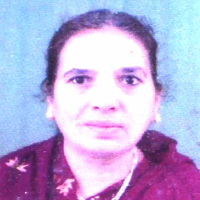
 Professor Qamar Jahan (1947–2025) was one of contemporary Urdu literature’s most distinguished fiction writers and critics. Over a career spanning nearly six decades, she made profound contributions to both creative writing and literary scholarship, leaving a lasting legacy on the Urdu literary landscape. Born in Samastipur, Bihar, into an intellectually inclined family, she passed away on February 11, 2025, in Ranchi, Jharkhand.
Professor Jahan’s intellectual environment at home, fostered by her father Syed Ataul Haq, nurtured her literary sensibilities from a young age. After her initial education, she pursued higher studies at Patna University, earning both a Master’s degree and a Ph.D. in Urdu Literature. Her academic prowess laid the foundation for a remarkable career in academia and literature.
Her professional life began with her appointment at S.M. College in Bhagalpur, where she eventually became the Head of the Urdu Department. She later moved to Tilka Manjhi Bhagalpur University (TMBU), where she served as the Head of the Post-Graduate Urdu Department and later as the Dean of the Faculty of Humanities. A dedicated mentor, she guided more than two dozen research scholars, playing a crucial role in shaping the next generation of Urdu academics. Her scholarly work gained international recognition, as indicated by her inclusion in the Library of Congress database.
Qamar Jahan’s literary journey started in 1966 with her first short story, Jinhone Wafa (Those Who Were Faithful). Her fiction is celebrated for its psychological depth and social realism, often exploring the inner lives and struggles of women navigating the space between tradition and modernity. Her narrative style masterfully blends classical Urdu prose with modern storytelling techniques.
Her major works include acclaimed short story collections like Charahgar (The Healer, 1983) and Ajnabi Chehre(Strange Faces, 1991). One of her most notable stories, Kati Hui Shakh (The Broken Branch), is a staple in the Bihar Board’s curriculum. It uses the powerful metaphor of a severed branch to explore themes of familial disconnection, displacement, and loss.
Beyond fiction, Professor Jahan was a formidable critic and scholar. Her critical study on the poet Akhtar Shirani, Akhtar Shirani Ki Jinsi Aur Roomani Shayeri (1987), offered deep insights into romanticism in modern Urdu poetry. Her research work, Rajasthan Mein Urdu Nasr Ki Ek Sadi (A Century of Urdu Prose in Rajasthan, 2009), was a pioneering effort in regional literary studies. She also dedicated herself to cultural preservation through editorial projects, compiling and editing classical works to make them accessible to contemporary audiences.
Professor Qamar Jahan’s death was mourned as a significant loss to the literary and academic worlds. Her legacy is multi-faceted: she was a literary innovator whose fiction brought new depth to Urdu storytelling; a meticulous scholar who expanded the scope of Urdu criticism; a dedicated educational leader who shaped institutional policy; and a preserver of cultural heritage. Her work continues to be studied in universities and inspires readers and writers, ensuring her voice remains a vital part of Urdu literature for generations to come.