
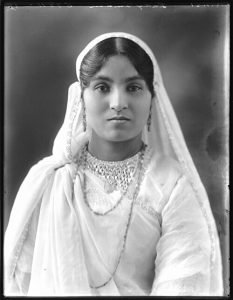
 Lady Anees Fatima Imam (1902–1979) was a pioneering freedom fighter, legislator, and advocate for women’s empowerment. Her life was a testament to her progressive ideals and unwavering commitment to public service, challenging the conservative norms of her era.
Born in 1902 in Patna, Bihar, to Saiyyad Raza Karim and Kabira Khatun, Anees was educated at home. Her upbringing was shaped by a liberal family environment, with her uncle, Syed Muhammad Raza, encouraging her studies. In 1923, she became the third wife of the distinguished barrister and political leader, Sir Ali Imam. The marriage was a meeting of modern minds; Sir Ali did not enforce the restrictive purdah (veil), and together they cultivated a socially progressive atmosphere from their home, Mariyam Manzil.
Lady Imam’s entry into public life was marked by her fervent participation in the Indian independence movement. Inspired by Mahatma Gandhi, she emerged as a prominent leader in Bihar. During the Non-Cooperation Movement (1920-22) and the Civil Disobedience Movement (1930-34), she was instrumental in organising women, leading processions, and encouraging the boycott of foreign goods. Her activism often led to confrontations with the British authorities.
Her political career achieved a major milestone in 1937 when she was elected to the Bihar Legislative Assembly from Patna City as an independent candidate. This victory made her one of the first women to enter the legislature in Bihar, where she championed social reform and women’s rights. Her close association with national leaders was well-known; Jawaharlal Nehru, India’s first Prime Minister, affectionately called her “Chachi” (aunt).
Lady Imam’s most enduring legacy lies in her work for women’s upliftment. Rejecting the confines of purdah herself, she worked tirelessly to liberate other women. She founded the Aghor Kamini Shilpalaya in Patna, a vocational institute dedicated to empowering women through skills and craft training. After India’s independence, she continued this work as the president of the Social Welfare Board, collaborating with other notable female reformers.
A dedicated philanthropist, she made significant contributions to education and public welfare. She was a staunch supporter of Patna’s famed Khuda Bakhsh Oriental Public Library and the Bihar Government Urdu Library. As president of the Anjuman Tarraqi-e-Urdu (Organisation for the Progress of Urdu), she championed the language and oversaw the publication of the literary magazine Miyaar. In a grand gesture of generosity, she donated vast tracts of land for public use, including the area in Patna that is now named Anisabad in her honour.
Lady Anees Fatima Imam passed away in 1979 without any children, but her legacy endures. She is remembered as a courageous reformer who broke barriers for women in politics and society, leaving an indelible mark on Bihar and the nascent Indian nation.