
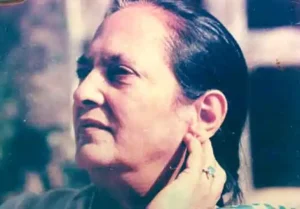
 Mehmooda Ali Shah, a towering figure in the history of Jammu & Kashmir, was a pioneering educator, a committed social reformer, and a lifelong activist whose work left an indelible mark on generations of women. Her profound contributions to literature and education were formally recognised in 2006 when she was awarded the Padma Shri, one of India’s highest civilian honours.
Born in Srinagar in 1920 to an educated Muslim Pahari family, Mehmooda was the daughter of a forest officer, Syed Ahmed Ali Shah, and Dulhan Begum. Breaking barriers from a young age, she became one of the first Kashmiri Muslim women to pursue higher education outside the valley. She attended the prestigious Kinnaird College in Lahore in the early 1940s, earning an honours degree. It was during her time at Lahore University that her political consciousness was awakened, and she became actively involved in the student union, laying the groundwork for her future activism.
Mehmooda Ali Shah is most remembered for her transformative tenure as the Principal of the Government Women’s College on M.A. Road, Srinagar. She became a household name, synonymous with the movement for women’s empowerment through education. She was a vocal critic of the purdah system, which she considered alien to Kashmiri culture, and actively encouraged her students to reject it in favour of social openness. Her vision of education was holistic, extending far beyond the classroom. She enriched the cultural life of the college by organising plays and musicals, often commissioning works from renowned literary figures like Dina Nath Nadim, thereby fostering a vibrant intellectual and artistic environment.
Her commitment to social change was deeply intertwined with her political beliefs. A staunch left-wing activist, she was closely aligned with the progressive, communist-leaning faction of the National Conference. During the tumultuous period of the 1947-48 conflict, she played a crucial role in the Women’s Self-Defence Corps, demonstrating her courage and dedication to a secular and progressive vision for Kashmir. She remained politically engaged throughout her life, never wavering from her feminist and secular principles, and collaborated with key political figures like G.M. Sadiq.
Though she never married, Mehmooda Ali Shah dedicated her life to her students and her community. Her legacy is not defined by a bibliography of written works but by the institutions she built and the minds she shaped. She was an educator who fostered a culture of critical thinking, artistic expression, and social responsibility. Her influence continues to be felt today, memorialised in events like the “Mehmooda Ali Shah Interdisciplinary Lecture Series” at her former college, a fitting tribute to a woman who championed intellectual curiosity and the empowerment of women. Her life’s work fundamentally reshaped the educational and cultural landscape of Kashmir, making her a true architect of its modern history.