
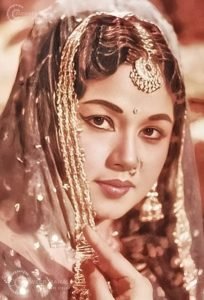
 Shakeela Bano Bhopali was India’s pioneering female Qawwali singer, a trailblazer who shattered gender barriers in the traditionally male-dominated art form. Hailed as the “Mallika-e-Qawwali” (Queen of Qawwali), she was celebrated for her magnificent voice, commanding stage presence, and innovative theatrical style that transformed the genre.
Born in Bhopal in 1942 into a conservative Muslim family, her path to stardom was unconventional. Despite her mother’s initial opposition, Shakeela’s undeniable talent eventually won her family’s support. She moved to Mumbai in the 1950s, where her powerful performances caught the attention of film industry stalwarts like Dilip Kumar. This launched a successful career in Hindi cinema, where she appeared in approximately 80 films during the 1960s and 1970s, often performing Qawwali numbers that became major attractions. Her on-screen presence in films like Ustaadon Ke Ustaad (1963), Gunda (1969), and the critically acclaimed Dastak (1970) solidified her fame. Some of her most iconic songs include “Milte hi nazar tumse, hum ho gaye deewane” and “Peene waale meri ankhon se piya karte hain.”
Her singing style was a unique spectacle. Possessing excellent command over Urdu, she recited complex poetry with effortless precision. Her performances were not just vocal but deeply performative, incorporating expressive gestures (adaa amozi) and fluid dance movements. She elevated Qawwali into a grand theatrical experience, featuring lavish backdrops, orchestral arrangements, and even elements of Western rhythms, thereby making it accessible to a wider audience. She famously prioritised live performances over studio recordings, believing her true artistry lay in the dynamic interaction with her audience. Never marrying, she often stated she was “married to Qawwali.”
A tragic turning point came with the 1984 Bhopal gas tragedy. The disaster irreparably damaged her health; she lost her powerful voice and suffered from severe respiratory ailments and other chronic conditions for the rest of her life. Her career effectively ended, and her health continued to decline until her death from cardiac arrest in Mumbai in 2002 at the age of 60.
Beyond her performances, Shakeela Bano Bhopali was an accomplished poet, authoring a collection titled Ek Ghazal Aur. Her legacy is that of a revolutionary artist who not only opened doors for women in Qawwali but also redefined the art form itself, popularising it globally and leaving an indelible mark on Indian music and cinema.