
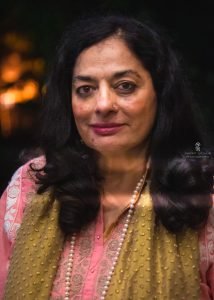
 Sadia Dehlvi (1957–2020) was a distinguished Indian writer, journalist, editor, and cultural commentator best known for her passionate advocacy of Sufism, her efforts to preserve Delhi’s syncretic traditions, and her contributions to Urdu literature and culinary heritage.
Born into the renowned Dehlvi family of Delhi, Sadia was the granddaughter of Hafiz Yusuf Dehlvi, who founded the iconic Urdu magazine Shama in 1938. The family also published Bano, a women’s Urdu magazine, and Sushma in Hindi. Sadia continued this legacy as editor of Bano and became a key figure in Urdu media and cultural journalism.
As a writer and columnist, Sadia Dehlvi’s work has appeared in publications such as The Hindustan Times, Frontline, and various Urdu and Hindi magazines. Her writing often centred around issues of Muslim identity, Sufi philosophy, women’s rights, Delhi’s cultural history, and Indian pluralism. She became a widely respected voice for promoting a tolerant, spiritual interpretation of Islam rooted in the teachings of India’s Sufi saints.
She authored three significant books published by HarperCollins:
-
Sufism: The Heart of Islam (2009), which explored Sufi teachings and their role in nurturing compassion and interfaith understanding.
-
The Sufi Courtyard: Dargahs of Delhi (2012), a richly researched guide to the spiritual and historical significance of Delhi’s dargahs.
-
Jasmine and Jinns: Memories and Recipes of My Delhi (2017) is a memoir that blends personal stories, cultural anecdotes, and traditional recipes, celebrating the fading heritage of Old Delhi.
Beyond writing, Sadia Dehlvi also worked in television and documentary production. She created the popular Doordarshan series Amma and Family (1995), starring Zohra Sehgal, and co-produced Not a Nice Man to Know (1998), a series with Khushwant Singh interviewing notable women. Her documentary series The Sufi Courtyard explored India’s spiritual landscape through major Sufi shrines.
She was known for her hospitality, storytelling, and fierce loyalty to the ethos of tehzib-e-Dilli, the refined cultural heritage of Delhi. Dehlvi’s home was a vibrant hub of intellectual and cultural exchange, frequented by scholars, artists, and activists. She was a close confidante of writer Khushwant Singh, who dedicated one of his books to her and praised her unwavering spirit.
Sadia’s personal life included a marriage to Pakistani national Reza Pervaiz, with whom she had a son, Armaan. After their divorce, she later married Sayyed Karamat Ali. Despite personal and political challenges, she remained a public figure of resilience, rooted in her faith and heritage.
Sadia Dehlvi passed away on August 5, 2020, after battling cancer. Though she received no formal state honours, she was deeply revered by the literary and cultural community. Her legacy endures through her writings, culinary chronicles, and her role as a passionate custodian of India’s spiritual and cultural pluralism.