
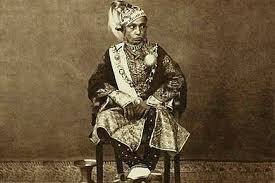
 Sikandar Begum (1817–1868), born on September 10, 1817, at Gauhar Mahal in Bhopal, was the daughter of Nawab Nasir Mohammad Khan and Qudsia Begum, the Nawab Begum of Bhopal. Raised in a lineage of female rulers, she defied gender norms by training in martial arts, including swordsmanship and archery. In 1835, she married Nawab Jahangir Mohammad Khan, and they had one daughter, Shah Jahan Begum, born in 1838. After her husband’s death in 1844, Sikandar assumed significant responsibilities in Bhopal’s governance.
Sikandar Begum became regent in 1844 for her minor daughter, who was nominally Nawab. In 1847, the British formally appointed her regent, and in 1860, she was recognised as Nawab in her own right due to her administrative competence. During the 1857 Indian Rebellion, she demonstrated loyalty to the British by suppressing anti-British activities and strengthening intelligence networks. Her support earned her the title of Knight Grand Commander of the Order of the Star of India in 1861, accompanied by a 19-gun salute.
Sikandar implemented significant reforms to modernise Bhopal. She reorganised the state into three districts and 21 sub-districts, appointed revenue officers, and cleared a ₹3 million debt. She established a customs office, secretariat, mint, postal service, and a modern judiciary with an appeal court. In 1847, she introduced the Majlis-e-Shoora, a consultative assembly for legislative recommendations. She replaced Persian with Urdu as the court language in 1862 and commissioned architectural projects, such as the Moti Masjid and Moti Mahal, blending Indo-Islamic and European styles. As a military leader, she personally inspected troops and led in battles.
A pioneer in women’s advancement, Sikandar founded the Victoria School for girls in Bhopal, offering education in Urdu, Hindi, and technical skills like handicrafts. She ensured that at least one middle school per district taught these languages, laying the groundwork for expanded female education under her successors. Her efforts challenged traditional norms and promoted the intellectual growth of women.
In 1863, Sikandar became the first Indian monarch to undertake the Hajj pilgrimage, travelling to Mecca with a large entourage. Her Urdu memoir, translated into English as A Princess’s Pilgrimage (1870), critiqued sanitary conditions in Mecca and Jeddah and documented her diplomatic interactions with Turkish officials. This work highlighted her reformist vision and advocacy for the mobility of Muslim women.
Sikandar, a devout Muslim, did not observe purdah, hunted tigers, played polo, and commanded her army. She died of kidney failure on October 30, 1868, at Moti Mahal and was succeeded by her daughter. Her legacy as part of the Begums of Bhopal dynasty endures for her governance reforms, educational initiatives, and intellectual contributions, which strengthened Bhopal and inspired future Muslim reformers in India.