
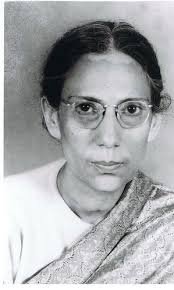
 Mumtaz Jahan Haider (1907–2003) was a pioneering Muslim woman in 20th-century India, renowned for her advancements in women’s education and emancipation. Born in Old Delhi to Sheikh Abdullah and Wahid Jahan Begum, founders of the Madrasa-i-Niwan (Girls’ Primary School) in Aligarh, she grew up in a progressive family that rejected the purdah system. Her father, known as ‘Papa Mian,’ was a key figure in the Aligarh Movement, advocating for Muslim women’s education amid conservative opposition.
Among her six siblings were notable figures, including Rashid Jahan, a writer associated with the Progressive Writers’ Movement, and Begum Khurshid Mirza (Renuka Devi), an actress who later migrated to Pakistan. The family had ties to arts luminaries like Zohra Sehgal and Uzra Butt. In 1935, Mumtaz married Hayder Khan, head of Aligarh Muslim University’s Chemistry Department; widowed in 1948, she raised their children—daughter Shahla, a senior official in the Ministry of Information and Broadcasting, and son Salman Haidar, India’s Foreign Secretary—independently.
Educated initially at her parents’ school, Mumtaz earned bachelor’s and master’s degrees in English from Lucknow University in 1931, becoming one of the first Muslim women to hold such degrees. She briefly taught at her family’s institution before obtaining a Bachelor of Education from Leeds University in the UK. Returning in 1937, she joined Aligarh Muslim University’s Women’s College, where she ascended to the position of principal in 1940—a role she held until 1971. Under her leadership, the college expanded significantly, securing substantial funding, including a 1949 grant from Maulana Abul Kalam Azad, and evolving into a premier institution for women’s higher education.
Her contributions to education were transformative: she increased enrollment, broadened the curriculum, and integrated extracurricular activities, such as debates and poetry recitals, to nurture holistic development. By inviting speakers and fostering progressive values, she empowered generations of Muslim women.
In women’s emancipation, Haider challenged patriarchal norms, interpreting Islam as a moral framework rather than rigid rituals. She promoted independence, organised ethical discussions, and proposed innovative ideas, such as a women’s mosque, though it faced posthumous resistance. Her efforts dismantled barriers, enabling broader societal participation for women.
Societally, known as ‘Mumtaz Apa,’ she provided mentorship and support, aiding women in need, even during her battle with Parkinson’s disease. Her resilience inspired alumni and advanced social reforms in post-colonial India.
The Aligarh Muslim University constituted a Gold Medal, ‘Mumtaz Jahan Haider Memorial University Gold Medal’, which is awarded for excellence in fields like English Literature since 2012 in her memory.