
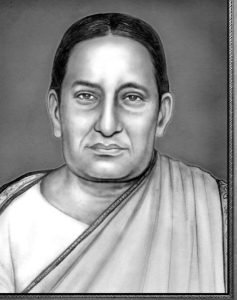
 Jamalunnisa Baji (1915-2016) was a prominent Indian freedom fighter, social worker, and literary advocate from Hyderabad, dedicating her long life to the cause of independence and progressive social change. Known affectionately as “Baji,” she was a courageous figure who defied the conservative traditions of her time to become a key participant in anti-imperialist movements and a champion for the downtrodden.
Born in Hyderabad in 1915, Jamalunnisa was raised in a liberal and progressive family that nurtured her intellectual curiosity from a young age. She grew up reading progressive literature and banned journals, which shaped her worldview. Despite the oppressive environment of the Nizam regime under the British Raj, she was drawn to the nationalist cause. Her path to activism was solidified after she met the famed freedom fighter Maulana Hasrat Mohani, whose revolutionary spirit inspired her to join the anti-imperialist movement. She committed herself fully to the cause, despite objections from her in-laws.
Her involvement in the freedom struggle was active and fearless. She was a participant in the Telangana armed conflict and, as a committed communist, she bravely provided sanctuary to freedom fighters who were being hunted by the Imperial Government. In 1946, she formally joined the Communist Party of India, aligning herself with close friends and comrades, such as the revolutionary poet Maqdoom Mohiuddin.
Alongside her political activism, Jamalunnisa Baji was a central figure in Hyderabad’s intellectual and literary scene. Despite lacking a formal higher education, she was fluent in both Urdu and English and was a founding member of the influential Progressive Writers’ Association (PWA). In a powerful act of personal and political defiance, she formally discarded the purdah during the All-India Progressive Writers’ Conference held in Hyderabad in 1945. She also founded her own literary society, Bazme Ehabab, which served as a forum for debates on socialism, communism, and the dismantling of outdated customs.
Late in her life, she documented her extraordinary experiences in her autobiography, “Bikhri Yaadein” (Scattered Memories), published in 2008. The book is a valuable historical record, chronicling a century of political and literary events in Hyderabad and reflecting on their profound impact on the lives of women.
Jamalunnisa Baji passed away in 2016 at the age of 101, leaving behind a legacy of unwavering commitment to independence, social justice, and racial peace. From her early days as a young activist to her final years as a revered elder, she remained a steadfast advocate for a more just and equitable society.